Friday, March 6, 2026

Human Risk Governance Moves to Center Stage as Living Security Unveils HRM Purchasing Toolkit

AUSTIN, TX – 06/03/2026 – (SeaPRwire) – In response to the rapid evolution of AI-powered cyber threats and mounting board-level scrutiny of workforce risk, Living Security has introduced a comprehensive Human Risk Management (HRM) Purchasing Toolkit designed to help enterprises formalize and operationalize human risk governance.

As generative AI tools enable increasingly sophisticated phishing campaigns, deepfake impersonations, and automated social engineering at scale, the timeline between initial compromise and full lateral movement has dramatically shortened. Security leaders report that incidents which once unfolded over weeks can now escalate within hours, intensifying the need for continuous visibility into human-driven risk factors.

Findings from the 2025 State of Human Cyber Risk Report published by the Cyentia Institute indicate that organizations relying exclusively on traditional security awareness training (SAT) programs maintain visibility into only a small fraction of workforce risk activity—approximately 12%. The research further highlights a pronounced concentration of risk behavior, with just 10% of users accounting for 73% of risky actions inside enterprises.

These insights underscore a structural visibility gap in conventional, compliance-focused training models. Rather than periodic awareness campaigns, organizations are increasingly shifting toward governance-oriented frameworks that continuously measure, prioritize, and mitigate behavioral risk across the workforce.

Ashley Rose, CEO and Co-Founder of Living Security, noted that AI has fundamentally altered the threat landscape by industrializing social engineering tactics. According to Rose, organizations that lack real-time human risk intelligence are left operating reactively, while structured HRM programs introduce measurable oversight and governance to the human layer of cybersecurity.

Industry validation of Human Risk Management as a distinct cybersecurity category has further accelerated market momentum. In The Forrester Wave™: Human Risk Management Solutions, Q3 2024, Living Security was recognized as a Leader, reflecting enterprise demand for telemetry-driven behavioral analytics and automated intervention capabilities.

The growing integration of generative AI into daily operations has also expanded the workforce risk surface. Enterprises must now account not only for human employees but also for AI agents and automated systems operating with delegated access. This evolution broadens exposure beyond phishing susceptibility to include identity misuse, data leakage, and autonomous actions executed on behalf of users.

Cybersecurity forecasts for 2026, including projections from security advisor Matthew Rosenquist, emphasize that awareness-based metrics alone are insufficient in an AI-augmented environment. Workforce risk measurement and governance are expected to become core pillars of enterprise security strategy in the year ahead.

Living Security’s AI-native HRM platform aggregates behavioral, identity, and threat telemetry to dynamically assess risk and initiate context-aware interventions. In enterprise deployments, organizations have reported measurable reductions in high-risk user concentrations and shorter exposure windows within the first 90 days of implementation.

Adoption has accelerated across regulated industries and innovation-intensive sectors, where demonstrable workforce risk governance is increasingly viewed as a board-level imperative. The broader strategic shift reflects a move away from tracking training participation toward quantifying and reducing actual exposure.

To support organizations navigating this transition, Living Security has developed the Human Risk Management Purchasing Toolkit, a structured resource aimed at CISOs, GRC leaders, and security teams evaluating HRM strategies and vendors.

The toolkit includes:

  • A Strategic HRM Framework with maturity modeling and readiness assessment
  • An Executive Business Case Pack featuring CFO-aligned ROI modeling guidance
  • An RFP & Vendor Evaluation Kit to facilitate structured platform comparison
  • A 90-Day Deployment Playbook outlining phased rollout and measurable risk reduction milestones
  • A GDPR & Works Council Consultation Template (EU) to support privacy-aligned implementation

According to the company, as regulators and corporate boards increasingly demand demonstrable workforce risk reduction, Human Risk Management is evolving into foundational cybersecurity infrastructure rather than a supplementary training function.

The HRM Purchasing Toolkit is available at:
https://www.livingsecurity.com/hrm-purchasing-toolkit

About Living Security

Living Security is a global provider of Human Risk Management solutions, focused on helping organizations measure and reduce workforce cyber risk through continuous behavioral intelligence and governance-driven security strategies. Recognized as a Leader in The Forrester Wave™: Human Risk Management Solutions, Q3 2024, the company supports enterprises seeking to transition from awareness-based reporting to measurable risk reduction in an AI-accelerated threat environment.


source https://newsroom.seaprwire.com/technologies/human-risk-governance-moves-to-center-stage-as-living-security-unveils-hrm-purchasing-toolkit/

Thursday, March 5, 2026

Telestream Expands Enterprise-Scale AI Across Media Workflows, Advancing Production Automation in 2026

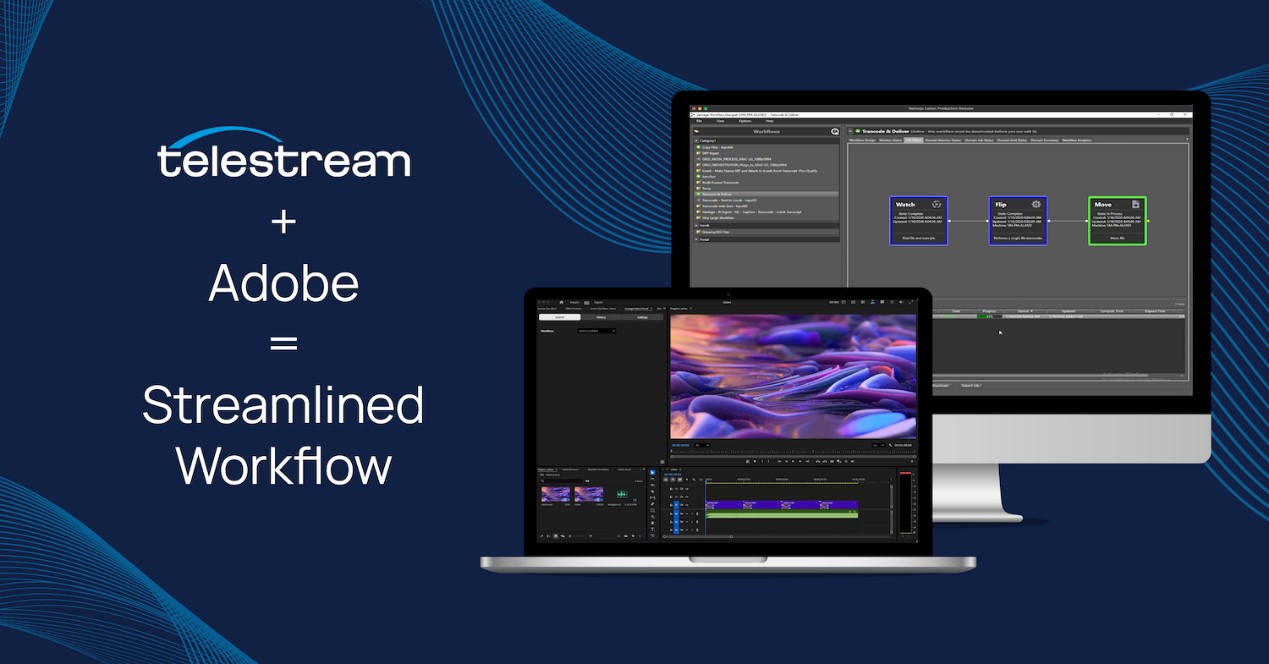
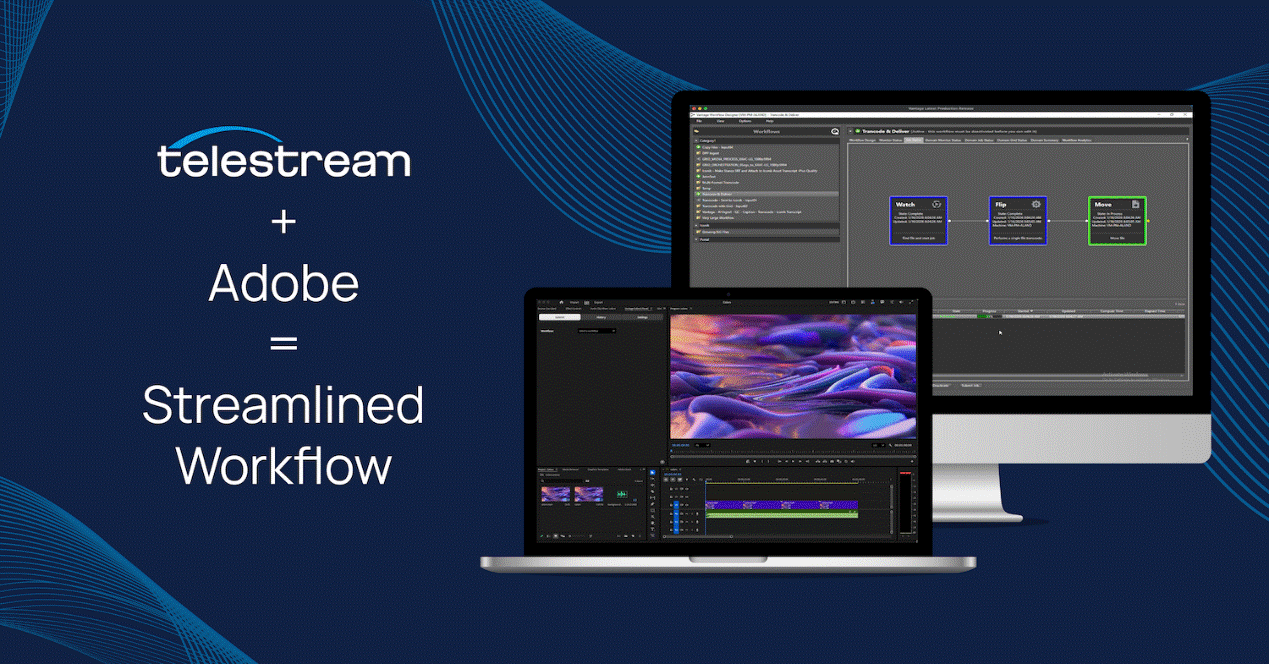
NEVADA CITY, CA – 05/03/2026 – (SeaPRwire) – As media companies confront mounting pressure to deliver more content, in more formats, to more platforms—without compromising compliance or quality—workflow automation has moved from competitive advantage to operational necessity. Against this backdrop, Telestream has announced a major expansion of AI-driven capabilities across its Vantage, Vantage Cloud, EDC, Stanza, and Qualify product lines, positioning artificial intelligence as an embedded and production-ready layer within enterprise media infrastructure.

Building on the Vantage AI foundation introduced in 2025, Telestream’s latest update shifts the focus from standalone AI features to enterprise-wide AI orchestration. The company stated that the enhancements are designed to accelerate localization, reinforce automated quality control, enable real-time metadata intelligence, and unify operations across on-premises, cloud, and hybrid deployments.

Rich Andes, Vice President of Product Management at Telestream, said the company is moving from AI experimentation to scalable operational impact. He noted that the expanded capabilities emphasize deeper cloud and hybrid integration, automated compliance checks, and intelligent workflow design built for real-world production environments.

Practical AI in Action: 2026 Enhancements

Telestream’s 2026 roadmap introduces operational advancements across five key AI domains:

AI Caption: Scalable Global Localization

AI-powered speech-to-text, caption generation, and translation now support up to 128 languages within Vantage and Stanza workflows. By integrating multilingual subtitle delivery into a unified processing chain, broadcasters and streaming platforms can reduce turnaround times for FAST channels, OTT services, and international sports distribution. The expansion enables large-scale localization without fragmenting workflow pipelines.

AI Qualify: AI-Driven Quality Control Inside the Pipeline

Enhancements to Qualify embed AI-assisted lip-sync validation, subtitle timing alignment, and spoken-language verification directly into automated QC processes. Rather than reviewing every asset manually, operators are alerted only to exception-based discrepancies. This targeted inspection model reduces review time while strengthening compliance confidence for multi-platform delivery.

AI Speech: Real-Time Intelligence for Growing Files

Telestream has extended speech-to-text and metadata extraction to support growing file workflows. This allows real-time tagging and searchable metadata creation during ingest, without waiting for file completion. Newsrooms, sports broadcasters, and live production teams can accelerate time-to-edit while improving downstream content discoverability.

AI Vision: Frame-Level Visual Intelligence

AI Vision introduces computer vision capabilities across Telestream workflows, converting video frames into actionable metadata beyond traditional file attributes. The system can detect objects, logos, lower thirds, safe-area violations, and potentially objectionable material while generating scene-level descriptions in real time.

Applications include logo detection and removal across large archives, ad-break identification for VOD repurposing, and automated scene description metadata for live feeds. By minimizing manual review, AI Vision enhances compliance management and expands automation in both live and file-based production environments.

AI Media Analyzer: Content-Aware Media Inspection

AI Media Analyzer advances quality assurance beyond technical validation to contextual content understanding. Instead of verifying only resolution, frame rate, or codec, the system analyzes the nature of the content, segments media into meaningful sections, and generates metadata reflecting scene changes, graphics overlays, content types, and potential compliance risks.

Available today within Telestream’s EDC platform and planned for integration into Vantage AI, Media Analyzer enables faster review cycles and more accurate workflow triggering. The company stated that this capability transforms media inspection into an automated, production-ready intelligence layer across ingest, processing, and delivery operations.

Operationalizing AI at Enterprise Scale

According to Telestream, the latest enhancements reflect a broader philosophy: AI must be embedded, explainable, and secure to deliver measurable value. Rather than producing isolated transcripts or labels, the focus is on reducing turnaround time, improving accuracy, and scaling automation within existing infrastructure.

Security and control remain central to deployment. Telestream emphasized that customers retain full ownership and control of their media assets whether systems are deployed on-premises, within private environments, or through managed cloud services. Customer content is not used to train shared AI models, supporting compliance, auditability, and predictable cost management.

Preparing for the Next Generation of Media Delivery

Beyond AI workflow innovation, Telestream continues to invest in next-generation format readiness and compliance frameworks. Ongoing development includes support for emerging video codecs and audio standards, as well as exploration of C2PA metadata workflows to address rising content authenticity and provenance requirements.

Collectively, these advancements reinforce Telestream’s role as a workflow platform partner for broadcasters, streaming services, and content producers seeking to modernize operations without sacrificing reliability, quality control, or governance.

Meet Telestream at NAB 2026

Members of the media are invited to connect with Telestream at NAB 2026. Briefings can be scheduled by contacting Kristin Canders at kristin@grithaus.agency. Additional information about Telestream’s production-ready AI solutions is available at www.telestream.com.

About Telestream

Headquartered in Nevada City, California, Telestream has been a pioneer in digital media workflow innovation for nearly three decades. The privately held company provides test and measurement and media workflow solutions that support the full media lifecycle—from capture and live production to automation, processing, quality control, content management, and distribution. Designed for on-premises, cloud, and hybrid environments, Telestream’s technologies enable high-quality media delivery to any audience on any platform.


source https://newsroom.seaprwire.com/technologies/telestream-expands-enterprise-scale-ai-across-media-workflows-advancing-production-automation-in-2026/

Wednesday, March 4, 2026

Innovation at a Crossroads: Global C-Suite Leaders Bet on AI to Reignite Growth

LONDON, UK – 04/03/2026 – (SeaPRwire) – A growing number of global enterprises are placing innovation at the center of their long-term growth agendas—but new research suggests that ambition alone may not be enough. A joint study conducted by Ipsos, Alchemy-Rx and Market Logic, titled Innovation Reignited: C-Suite Insights on the State of Innovation, reveals a widening gap between executive expectations for innovation-led growth and the operational realities that threaten to slow progress.

The survey of C-suite executives finds that 82% of companies expect innovation to serve as a primary driver of growth strategy. However, only one-third of respondents (33%) believe innovation initiatives will contribute more than 20% of total revenue within the next three years. This cautious outlook reflects broader concerns about execution effectiveness, particularly as fewer than 75% of innovation launches reportedly achieve all their stated objectives.

Customer Understanding Remains a Critical Weakness

Despite widespread acknowledgment that customer-centricity should underpin every stage of the innovation lifecycle, 32% of executives identify insufficient consumer understanding as a central barrier to meaningful innovation.

Notably, the solution does not appear to lie in simply collecting more data. While 46% of companies report significant investment in primary consumer research, many still describe themselves as “insights-starved.” Two structural issues emerge from the findings: 28% cite concerns about data accuracy, while 24% point to the paradox of having abundant data but limited actionable insight. The result is an intelligence bottleneck that constrains idea generation and weakens downstream innovation outcomes.

AI Emerges as a Transformational Catalyst

In response to these challenges, organizations are increasingly turning to artificial intelligence to enhance speed, scale and effectiveness across the innovation pipeline. An overwhelming 83% of surveyed executives expect AI to have a “very” or “extremely impactful” effect on their innovation capabilities over the next three years.

AI adoption is already taking shape in several core areas:

  • 45% are using AI to search or summarize research databases
  • 45% are leveraging AI to write or optimize new product or service concepts
  • 41% are testing new ideas through AI-enabled simulations rather than relying solely on human respondents

Collectively, the findings illustrate enterprises that are aggressively reorienting around innovation-led growth, even as they navigate operational friction, rapidly evolving consumer expectations, and mounting pressure on insights functions to deliver faster, more strategic value.

Olaf Lenzmann, Chief Innovation and Product Officer at Market Logic, commented that the research underscores the urgency of building more agile, technology-enabled innovation systems. He noted that organizations seeking not only to respond to customer behavior but to anticipate it must integrate AI throughout their innovation workflows to unlock the full potential of available insights.

Richard Davies, co-founder of Alchemy-Rx, observed that innovation momentum has stalled in many organizations. He attributed this in part to inadequate consumer insight capabilities and ideation processes that produce undifferentiated launches. Davies emphasized the importance of generating a high volume of early-stage ideas and re-prioritizing insights to enable sustainable, innovation-driven growth.

Aron Galonsky of Ipsos added that decades of industry experience reinforce the central role innovation plays in business success. However, as markets accelerate and automation becomes standard practice, he cautioned that insufficient focus on innovation may hinder growth. Re-centering innovation efforts, he suggested, is essential for organizations aiming to regain competitive momentum.

A full copy of the research report is available for download online.

About Market Logic

Market Logic is a leading SaaS provider of market intelligence and insights solutions. Through its DeepSights AI technology, the company supports enterprise decision-makers with scalable, trusted insights delivered at speed. For more than 15 years, Market Logic has partnered with consumer-focused brands worldwide to transform them into insights-driven organizations. Its client portfolio includes global market leaders such as Unilever, Vodafone, Bayer and Tesco.

About Ipsos

Ipsos is a global market research company committed to delivering accurate and actionable insights in an increasingly complex world. Combining scientific rigor, advanced technology and sector expertise, Ipsos helps organizations achieve a deeper understanding of society, markets and people, enabling faster and more confident decision-making.

About Alchemy-Rx

Alchemy-Rx is a growth consultancy focused on helping brands unlock practical, high-impact growth strategies. With expertise spanning strategy, marketing, innovation and analytics, the firm partners with organizations ranging from startups to Fortune 200 companies to address critical growth challenges with actionable solutions.


source https://newsroom.seaprwire.com/technologies/innovation-at-a-crossroads-global-c-suite-leaders-bet-on-ai-to-reignite-growth/

Tuesday, March 3, 2026

Platform Expand Introduces Integrated Canada Expansion Solutions for International Enterprises

VANCOUVER, BC – 03/03/2026 – (SeaPRwire) – As international businesses reassess global expansion strategies amid evolving regulatory and economic conditions, Canada is increasingly positioned as a gateway to North America. Responding to growing demand for structured and compliant market entry solutions, Platform Expand, a subsidiary of Sparkcorpnet, has unveiled a suite of premium services aimed at supporting foreign companies establishing and operating within the Canadian jurisdiction.

Sparkcorpnet is an international business and technology consulting firm specializing in scalable growth strategies for cross-border enterprises. Through its dedicated expansion arm, Platform Expand, the organization now offers integrated solutions designed to help technology companies, manufacturers, exporters, and global founders navigate Canadian incorporation, regulatory compliance, and trade representation requirements.

Canada continues to attract international enterprises due to its transparent legal system, investor-friendly environment, and extensive trade agreements covering more than 51 countries. Yet market entry often presents structural and regulatory complexities. Foreign businesses must evaluate appropriate incorporation structures, address Canada Revenue Agency (CRA) documentation and tax compliance, and secure credible local representation to operate effectively. These processes can delay expansion timelines and elevate operational risk when not strategically managed.

For fast-scaling technology firms—including AI developers, SaaS providers, EdTech platforms, and IT outsourcing companies—rapid product growth frequently precedes formal corporate structuring. Meanwhile, manufacturers and exporters seeking access to North American supply chains may encounter commercial barriers without Canadian-based representation and structured compliance frameworks.

To address these challenges, Platform Expand has introduced three core service categories, with entry-level package pricing starting from $1,990:

  1. Corporate Services – Structured support for incorporation in Canada, Canadian company formation, holding company structuring, CRA compliance guidance, regulatory documentation preparation, and virtual office or local representation solutions.
  2. Market Access Services – Comprehensive market entry strategies tailored to Canadian commercial standards, supporting international companies in strategic positioning, regulatory readiness, and operational planning.
  3. Trade Representative Services – Canadian-based representation designed to facilitate international trade operations, manage buyer and supplier communications, support cross-border transactions, and provide ongoing market intelligence.

According to Marc Pham, CEO of Sparkcorpnet, many global founders face obstacles not due to lack of ambition but due to insufficient structural planning when expanding into North America. He noted that Platform Expand aims to help international companies establish appropriate corporate frameworks, align with Canadian regulatory requirements, and build credible local presence to support sustainable expansion across Canada and the broader region.

Canada remains a strategic jurisdiction for international structuring due to its regulatory stability, competitive corporate tax environment, and asset protection mechanisms available through holding company models. Incorporation in Canada can enhance investor confidence and enterprise credibility for technology firms, while exporters and manufacturers benefit from structured access to North American markets under transparent governance standards.

About Platform Expand

Platform Expand is a Canada-based business expansion platform and subsidiary of Sparkcorpnet. The firm specializes in incorporation in Canada, Canadian company formation, international trade facilitation, holding company structuring and operational management, as well as structured market entry solutions. Platform Expand supports international technology companies, manufacturers, exporters, and global founders seeking compliant, credible, and scalable operations within the Canadian jurisdiction.


source https://newsroom.seaprwire.com/technologies/platform-expand-introduces-integrated-canada-expansion-solutions-for-international-enterprises/

Monday, March 2, 2026

Electronic Caregiver Accelerates Expansion to Establish Rio Grande Health Technology Corridor in Southern New Mexico

LAS CRUCES, NM – 02/03/2026 – (SeaPRwire) – A quiet transformation is underway in Southern New Mexico. In a region historically known for scientific laboratories and aerospace research, a commercially scaled artificial intelligence healthcare enterprise is steadily taking shape—built not as a research experiment, but as a nationally deployed infrastructure platform serving patients in their homes.

Electronic Caregiver, Inc., headquartered in Las Cruces, has announced continued operational expansion aligned with its long-term initiative to develop what it calls the Rio Grande Health Technology Corridor. The initiative aims to establish Southern New Mexico as a nationally recognized center for AI-enabled healthcare infrastructure.

For decades, New Mexico’s economy has benefited from advanced research institutions and aerospace programs. However, it has rarely produced a consumer-integrated AI healthcare platform operating at national commercial scale. Electronic Caregiver is positioning itself to fill that gap.

At the core of the company’s expansion is its Addison Care platform, a continuous AI-driven healthcare engagement system that integrates remote patient monitoring, TeleCare operations, longitudinal data management, reimbursement alignment, and family caregiver coordination. The platform operates across multiple states and serves patients, clinics, home care networks, and payer organizations throughout the United States.

Unlike research-driven ventures or specialized aerospace projects, Electronic Caregiver functions as a recurring-revenue enterprise delivering real-world healthcare services and technology infrastructure directly to end users. The company reports more than 100 pilot deployments across diverse healthcare verticals and has secured national payer taxonomy approvals, enabling broader reimbursement integration.

Building the Rio Grande Health Technology Corridor

Electronic Caregiver is expanding operational capacity across Southern New Mexico, with plans to strengthen patient monitoring, TeleCare operations, logistics, and technology infrastructure from Las Cruces to Roswell over the next 12 to 18 months.

Internally referred to as the Rio Grande Health Technology Corridor, the initiative is designed to anchor high-skill, high-wage employment in the region. The company’s workforce spans a wide spectrum of disciplines, including:

  • Advanced software engineering
  • Artificial intelligence and machine learning
  • Cloud computing and IT architecture
  • Computer vision and edge computing
  • IoT device orchestration
  • Mixed reality and user experience design
  • Biomechanics and biometric monitoring
  • Health interoperability and microservices infrastructure
  • Full-stack TeleCare operations
  • Nursing and clinical services
  • Scientific and clinical research
  • Compliance and payer infrastructure
  • Hardware lifecycle management
  • National logistics and fulfillment
  • Commercial and medical sales
  • Digital marketing and media production
  • Customer experience operations
  • Accounting and financial systems
  • Intellectual property development
  • Workforce development and internal capital formation

The company also operates at the intersection of LLM integration, data architecture, real-world longitudinal engagement analytics, and scalable cloud infrastructure—capabilities typically associated with major coastal technology ecosystems.

Silicon Valley-Caliber Employment in the Border Region

Electronic Caregiver currently employs hundreds of professionals and continues to recruit across technical, clinical, operational, and commercial roles. Leadership has indicated that the company’s objective is to build a nationally and globally recognized health technology brand organically founded and headquartered in Las Cruces.

Given the city’s proximity to El Paso and its position as New Mexico’s second-largest metropolitan area, the company sees opportunity for cross-border regional growth. Over the coming year, expansion efforts will focus on reinforcing the southern portion of the state through increased TeleCare and monitoring infrastructure.

Executives have characterized the strategy as bringing Silicon Valley-level professional opportunities to labor markets defined by strong work ethic, cultural cohesion, and long-term community commitment.

A National AI Healthcare Infrastructure Layer

Electronic Caregiver’s platform combines consumer-facing AI engagement with reimbursement-aligned healthcare delivery. Its system supports daily care adherence, early detection of health status changes, home safety oversight, and longitudinal care coordination.

By partnering with global technology leaders while maintaining operational independence, the company positions itself as a durable infrastructure layer within the rapidly evolving AI-first healthcare ecosystem.

Transitioning from Research Export to Scalable Enterprise

New Mexico has historically exported engineering and scientific talent to other technology centers. The Rio Grande Health Technology Corridor represents an effort to retain, deploy, and scale that talent within a founder-led commercial enterprise headquartered locally.

A significant portion of Electronic Caregiver’s workforce consists of graduates from New Mexico State University. Over the past 15 years, the company has maintained a sustained collaborative relationship with the university, contributing to applied research initiatives and workforce cultivation.

In partnership with the university, Electronic Caregiver helped develop an Advanced TeleCare Care Coach certification program that is now formally offered to students. The curriculum prepares graduates for high-skill positions in virtual care operations, remote patient engagement, AI-assisted clinical support, and longitudinal care coordination.

This structured certification pathway creates a direct bridge between academic training and nationally scaled healthcare infrastructure deployment. By integrating applied research, advanced healthcare engineering, and formal workforce certification, Electronic Caregiver demonstrates that nationally competitive AI healthcare platforms can be designed, staffed, and expanded from Southern New Mexico.

About Electronic Caregiver

Founded in 2009, Electronic Caregiver, Inc. is a New Mexico-based healthcare technology company delivering AI-driven continuous care infrastructure through its Addison Care platform. The company integrates remote patient monitoring, TeleCare operations, longitudinal data systems, reimbursement pathways, and consumer engagement technologies to extend healthcare into the home across the United States.


source https://newsroom.seaprwire.com/technologies/electronic-caregiver-accelerates-expansion-to-establish-rio-grande-health-technology-corridor-in-southern-new-mexico/

Sunday, March 1, 2026

Mission Control AI Introduces Swarm Platform to Operationalize Governed Synthetic Workforces

SAN FRANCISCO, CA – 01/03/2026 – (SeaPRwire) – Mission Control AI has formally introduced the broad availability of Swarm, a synthetic workforce platform designed to deploy and govern autonomous digital employees inside enterprise environments. The San Francisco-based public benefit corporation positions the platform as an infrastructure layer for organizations seeking controlled, accountable AI systems capable of performing operational work alongside human teams.

Previously rolled out in selective deployments, Mission Control’s synthetic workers are already operating within Fortune 500 enterprises and organizations supporting national-level critical functions. With general availability, the company is expanding access to what it describes as a fully managed synthetic labor system engineered for secure, high-stakes environments.

Unlike chatbot interfaces or workflow automation tools, Swarm’s synthetic workers are designed to operate computers in a manner similar to human employees. They can open enterprise software applications, navigate legacy systems, retrieve and analyze data, make rule-based and contextual decisions, manage exceptions, and complete multi-step operational processes. Each digital worker is assigned a defined role and identity, enabling structured collaboration within existing organizational frameworks.

Swarm functions as a centralized command and governance layer. The platform provides tools for deployment, monitoring, traceability, execution oversight, and systems integration. Enterprises can operate the system independently, work with Mission Control to train and configure synthetic employees, or adopt a hybrid model combining internal oversight with vendor support.

According to Ramsay Brown, CEO and co-founder of Mission Control AI, enterprise demand is shifting from experimentation to controlled implementation. He noted that organizations increasingly require AI systems that can function autonomously within secure environments while adhering to strict governance standards. The company emphasizes that safety mechanisms, guardrails, and permission boundaries are architected directly into the platform rather than added as external controls.

Security architecture is a central component of Swarm’s design. Synthetic workers operate within pre-approved toolsets and cannot execute unauthorized commands, install unapproved software, or elevate their own permissions. Every action is logged, and decision pathways are recorded to create a transparent audit trail. This traceability framework is intended to provide visibility not only into outcomes, but also into the reasoning steps considered by the system.

The platform is designed to be vendor-neutral and interoperable. Mission Control synthetic workers can integrate with models from multiple AI providers, including Anthropic, OpenAI, and Grok, or operate with custom-trained sovereign models. Organizations may switch providers without reconfiguring workflows or infrastructure.

Importantly, Swarm does not require enterprises to modernize or redesign legacy systems. Synthetic workers interact with existing software environments using standard interfaces such as keyboard, mouse, and screen navigation. This approach allows organizations to deploy AI labor without undertaking large-scale system integration projects.

The company is entering the market amid heightened executive concern regarding unsanctioned AI agents operating within corporate networks. Industry observers have reported growing internal use of independently deployed agentic tools that may lack centralized governance or auditability. Mission Control positions Swarm as a managed alternative, offering bounded permissions, identity controls, and accountability structures intended to reduce operational and security risk.

Brown stated that enterprise conversations have evolved beyond capability demonstrations toward questions of responsibility and oversight. In this context, Mission Control frames trust, identity management, bounded authority, and auditable decision-making as foundational requirements for autonomous systems participating in modern enterprise operations.

Headquartered in San Francisco, Mission Control AI is scaling its team and operational capacity to meet rising demand for synthetic workforce deployments across sectors including energy, financial services, logistics, advanced manufacturing, and national security.

About Mission Control AI
Mission Control AI PBC describes itself as the first synthetic labor company focused on building the infrastructure required to deploy and govern autonomous AI workers. Founded by computational neuroscientist Ramsay Brown, who published early research on synthetic labor in 2021, the company operates as a Public Benefit Corporation with a charter-oriented mission. Mission Control concentrates on supporting mission-critical industries with governed, accountable AI workforce solutions.


source https://newsroom.seaprwire.com/technologies/mission-control-ai-introduces-swarm-platform-to-operationalize-governed-synthetic-workforces/